Symphyotrichum georgianum
In the open oak-hickory woodlands and fire-maintained savannas that once covered the upland South, Georgia aster was a fixture... a late-season native sending up violet-blue flowers in October and November at the precise moment when almost everything else had finished. That landscape is largely gone now. The aster went with most of it.
What remains are scattered populations in Georgia, Alabama, the Carolinas, and a handful of other Piedmont sites; populations that persist not because the plant is particularly fragile, but because it requires something modern land management rarely provides: disturbance. Fire, specifically. Georgia aster evolved in ecosystems shaped by regular burning, where the suppression of woody encroachment kept the canopy open and the light reaching the ground. Take away the fire, and the shrubs move in. Take away the shrubs' competition, and the aster comes back. The plant itself is not the problem.
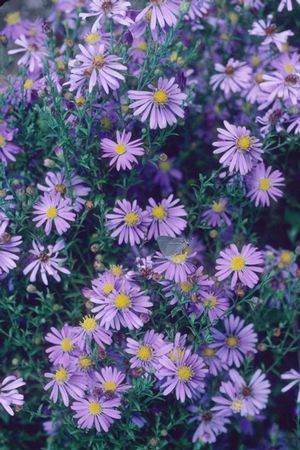
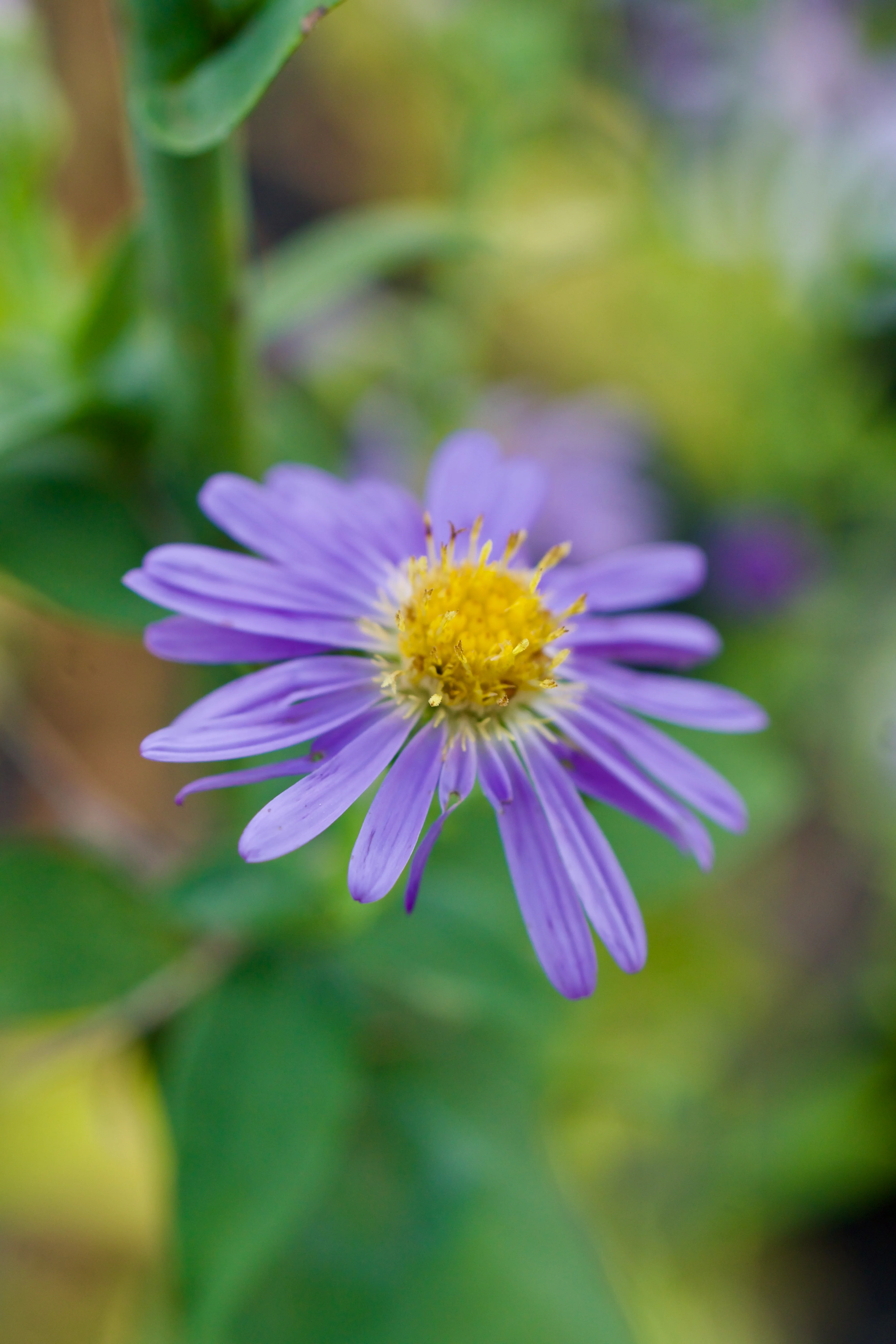
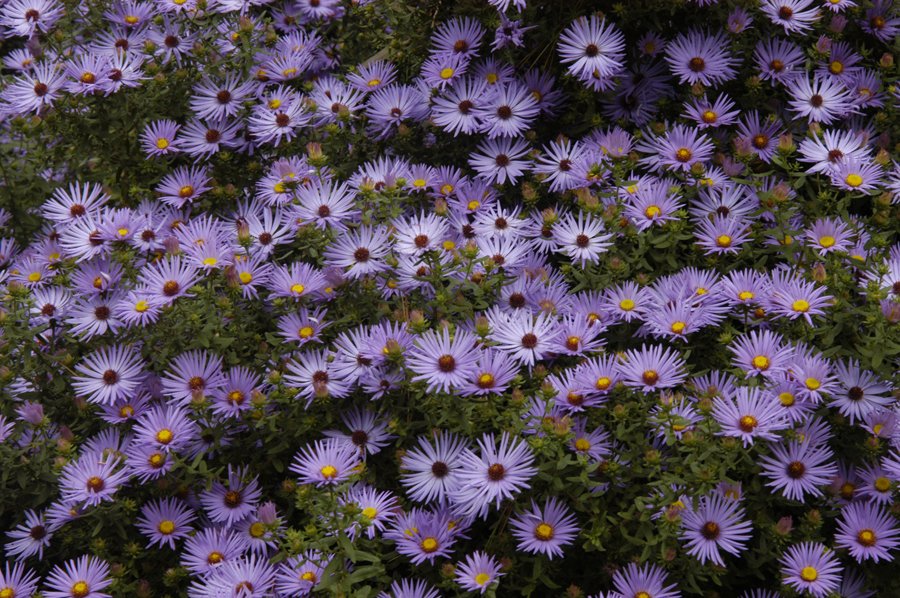
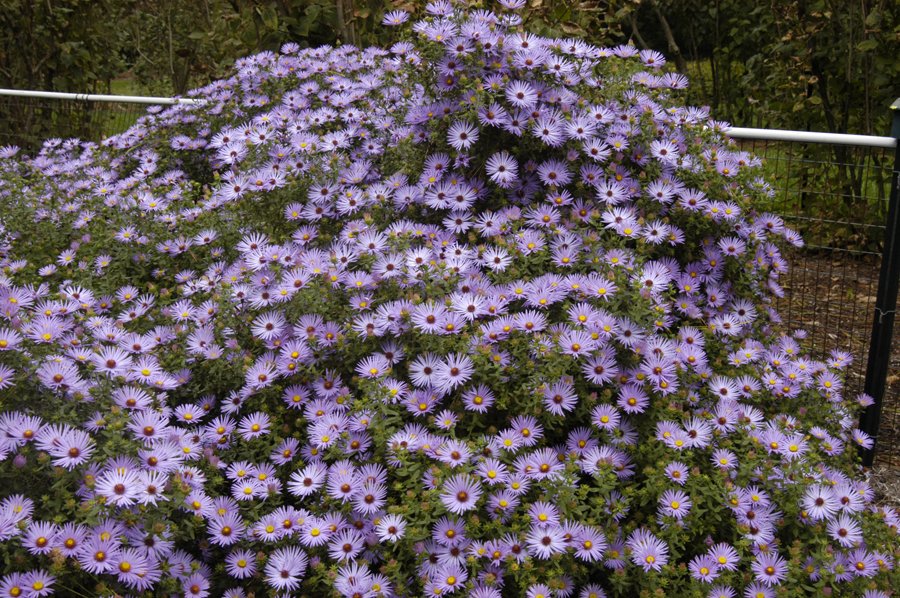
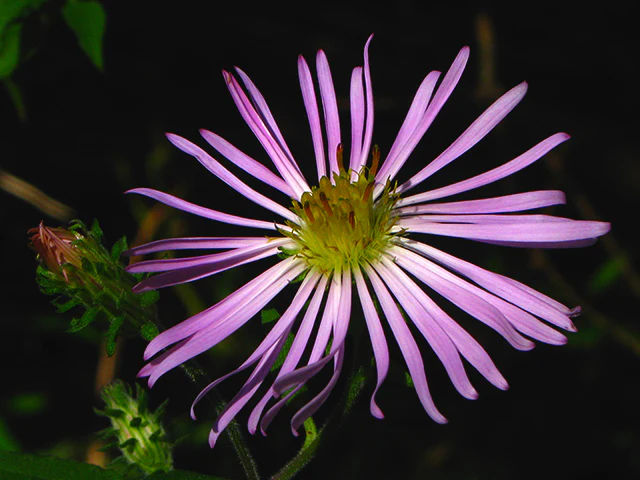
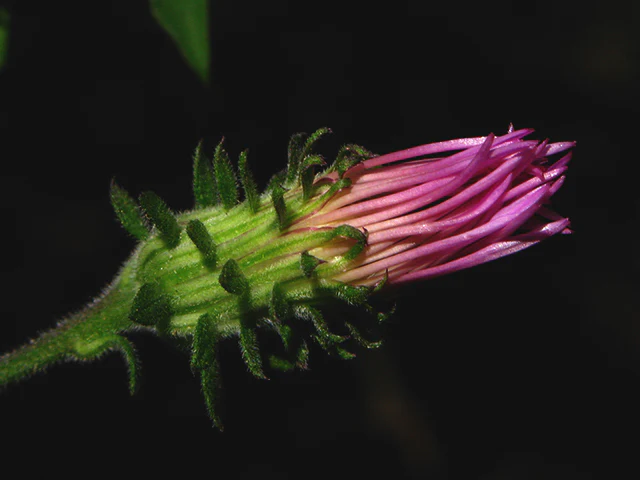
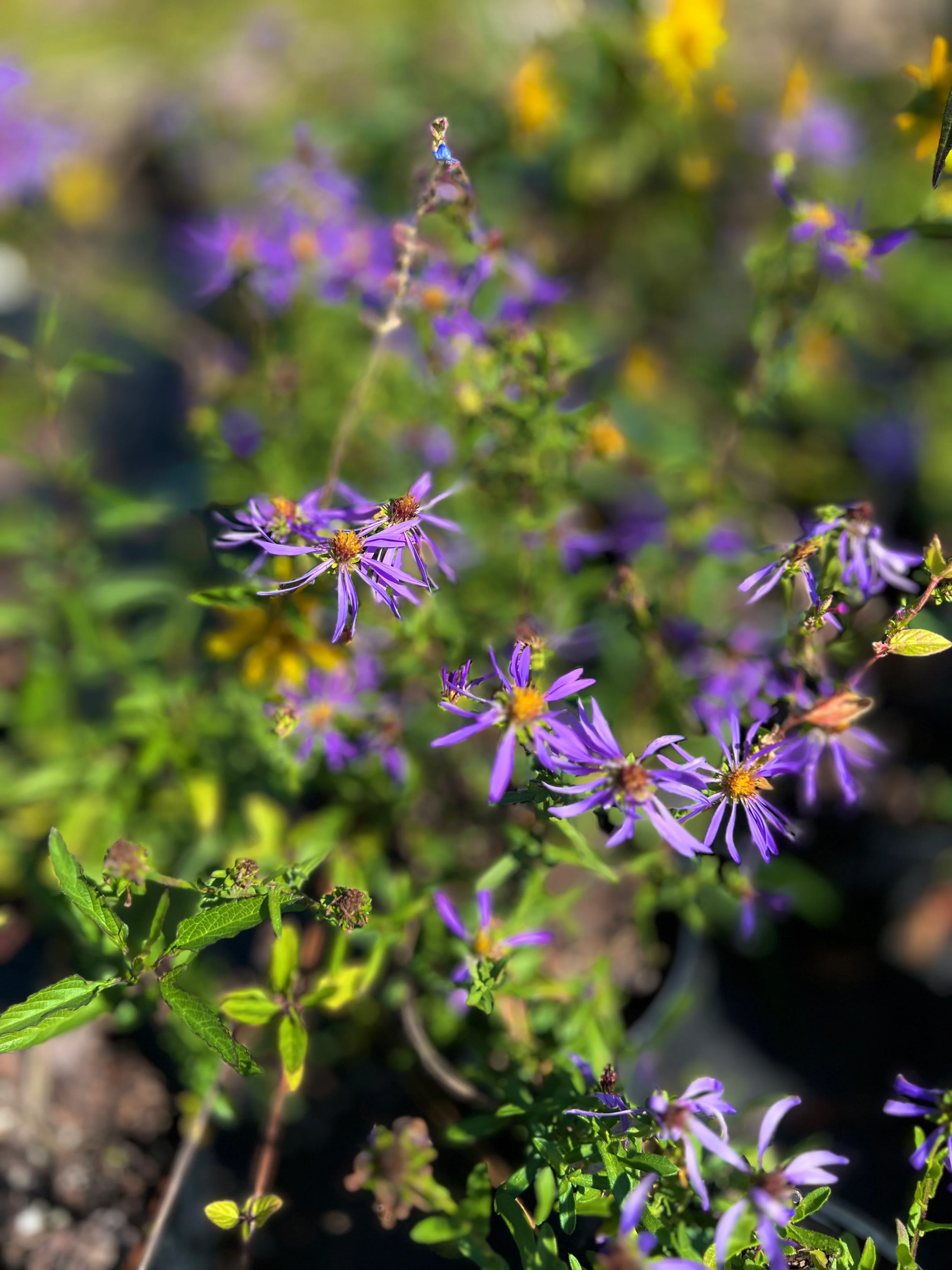
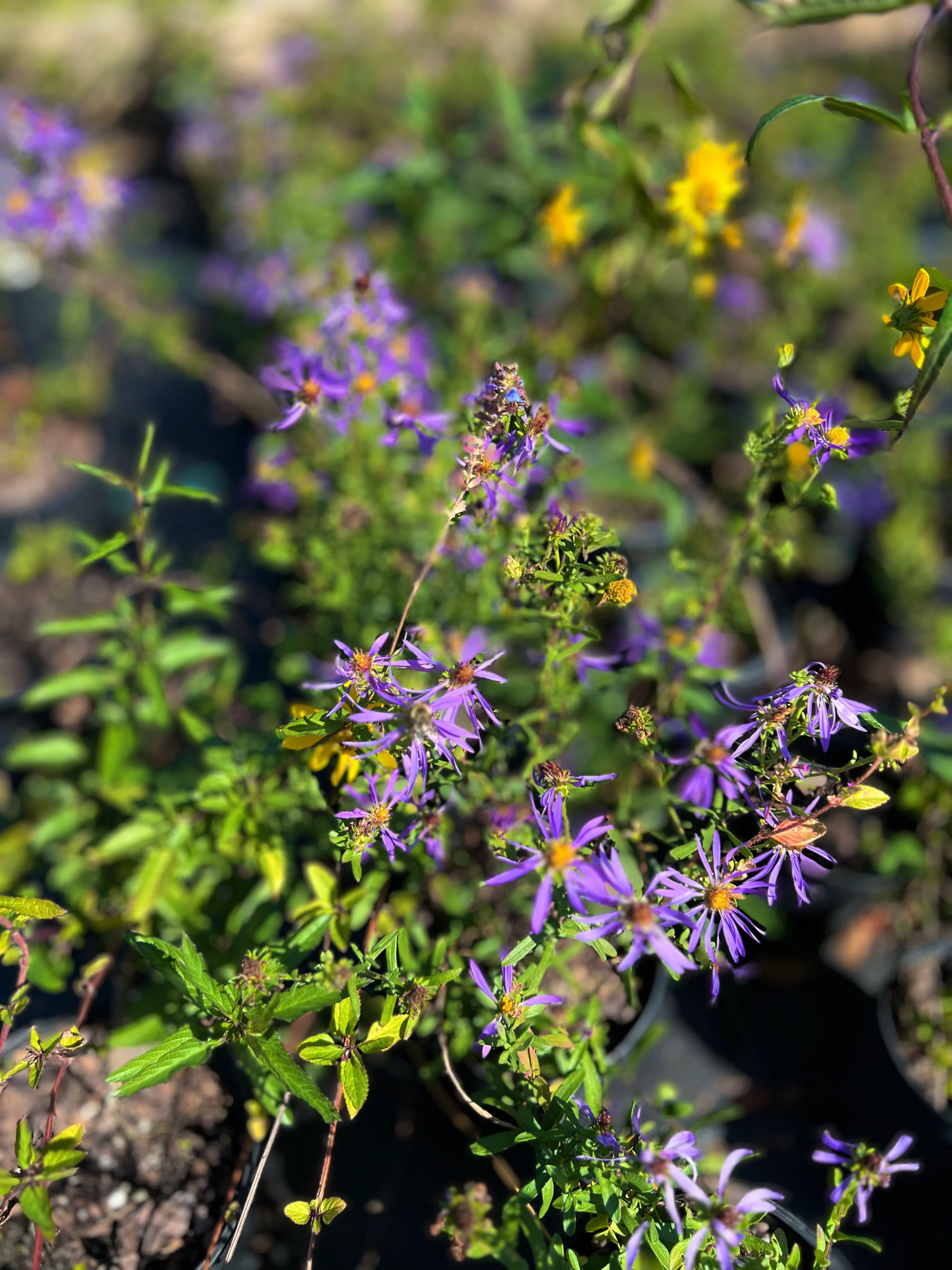
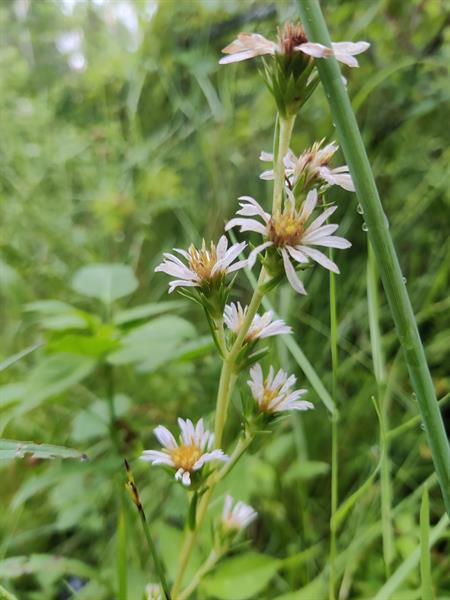
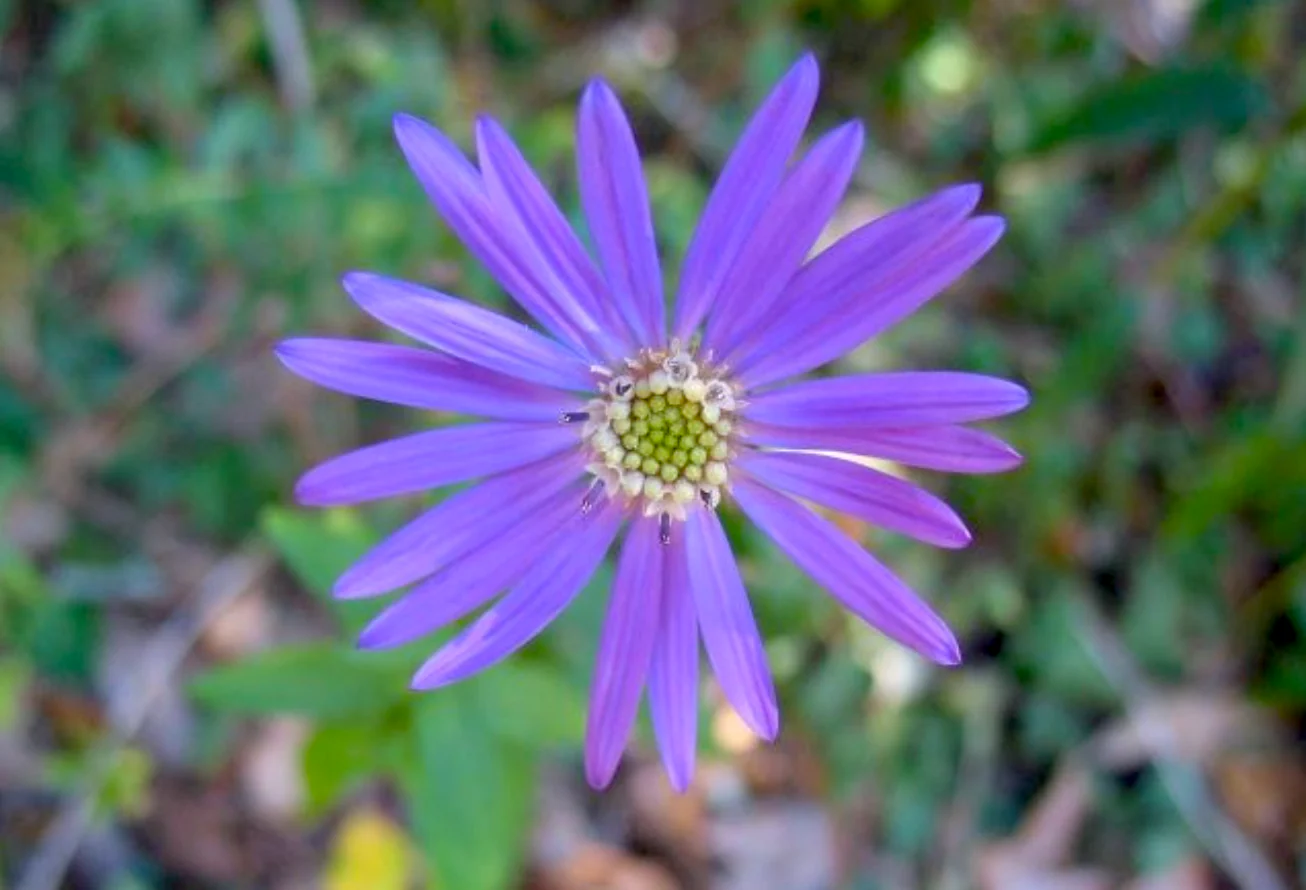
This makes Symphyotrichum georgianum a genuinely interesting garden subject, not just botanically significant but ecologically legible in a way that few native perennials manage. In cultivation it spreads steadily via underground rhizomes, forming colonies that expand politely over time rather than aggressively. The October flowers are a vivid violet-blue, borne in loose branching clusters on stems that reach three to four feet late enough in the season to overlap with goldenrods and ornamental grasses, early enough to avoid the first frosts in most of its range. Bees and late-season butterflies find it reliably, sometimes in considerable numbers.
Growing Georgia aster is, in a quiet way, a conservation act. The garden populations that exist in cultivation, including ours, represent a meaningful fraction of what's left of this species in any accessible form. It is a rare plant worth knowing, and worth growing.
In the open oak-hickory woodlands and fire-maintained savannas that once covered the upland South, Georgia aster was a fixture... a late-season native sending up violet-blue flowers in October and November at the precise moment when almost everything else had finished. That landscape is largely gone now. The aster went with most of it.
What remains are scattered populations in Georgia, Alabama, the Carolinas, and a handful of other Piedmont sites; populations that persist not because the plant is particularly fragile, but because it requires something modern land management rarely provides: disturbance. Fire, specifically. Georgia aster evolved in ecosystems shaped by regular burning, where the suppression of woody encroachment kept the canopy open and the light reaching the ground. Take away the fire, and the shrubs move in. Take away the shrubs' competition, and the aster comes back. The plant itself is not the problem.
This makes Symphyotrichum georgianum a genuinely interesting garden subject, not just botanically significant but ecologically legible in a way that few native perennials manage. In cultivation it spreads steadily via underground rhizomes, forming colonies that expand politely over time rather than aggressively. The October flowers are a vivid violet-blue, borne in loose branching clusters on stems that reach three to four feet late enough in the season to overlap with goldenrods and ornamental grasses, early enough to avoid the first frosts in most of its range. Bees and late-season butterflies find it reliably, sometimes in considerable numbers.
Growing Georgia aster is, in a quiet way, a conservation act. The garden populations that exist in cultivation, including ours, represent a meaningful fraction of what's left of this species in any accessible form. It is a rare plant worth knowing, and worth growing.
Description
In the open oak-hickory woodlands and fire-maintained savannas that once covered the upland South, Georgia aster was a fixture... a late-season native sending up violet-blue flowers in October and November at the precise moment when almost everything else had finished. That landscape is largely gone now. The aster went with most of it.
What remains are scattered populations in Georgia, Alabama, the Carolinas, and a handful of other Piedmont sites; populations that persist not because the plant is particularly fragile, but because it requires something modern land management rarely provides: disturbance. Fire, specifically. Georgia aster evolved in ecosystems shaped by regular burning, where the suppression of woody encroachment kept the canopy open and the light reaching the ground. Take away the fire, and the shrubs move in. Take away the shrubs' competition, and the aster comes back. The plant itself is not the problem.
This makes Symphyotrichum georgianum a genuinely interesting garden subject, not just botanically significant but ecologically legible in a way that few native perennials manage. In cultivation it spreads steadily via underground rhizomes, forming colonies that expand politely over time rather than aggressively. The October flowers are a vivid violet-blue, borne in loose branching clusters on stems that reach three to four feet late enough in the season to overlap with goldenrods and ornamental grasses, early enough to avoid the first frosts in most of its range. Bees and late-season butterflies find it reliably, sometimes in considerable numbers.
Growing Georgia aster is, in a quiet way, a conservation act. The garden populations that exist in cultivation, including ours, represent a meaningful fraction of what's left of this species in any accessible form. It is a rare plant worth knowing, and worth growing.