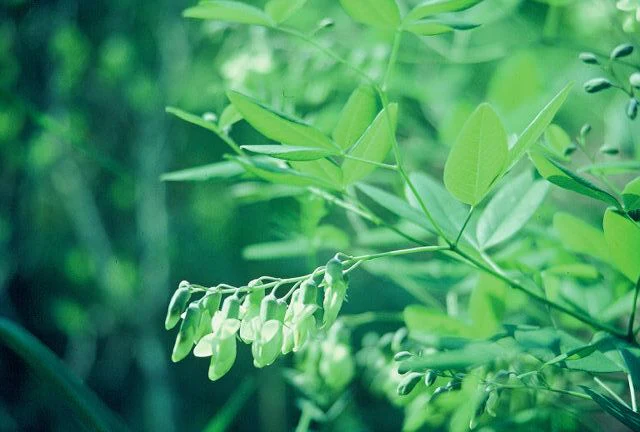
Baptisia megacarpa
Baptisia megacarpa—known as Apalachicola Wild Indigo or Bigpod Wild Indigo—is a rare and remarkable species native to the floodplains and forested slopes of the Florida Panhandle, southeastern Alabama, and southwestern Georgia. Its natural habitat includes sandy ridges and stream terraces in the Chattahoochee River drainage, making it specially adapted to the unique conditions of this region.
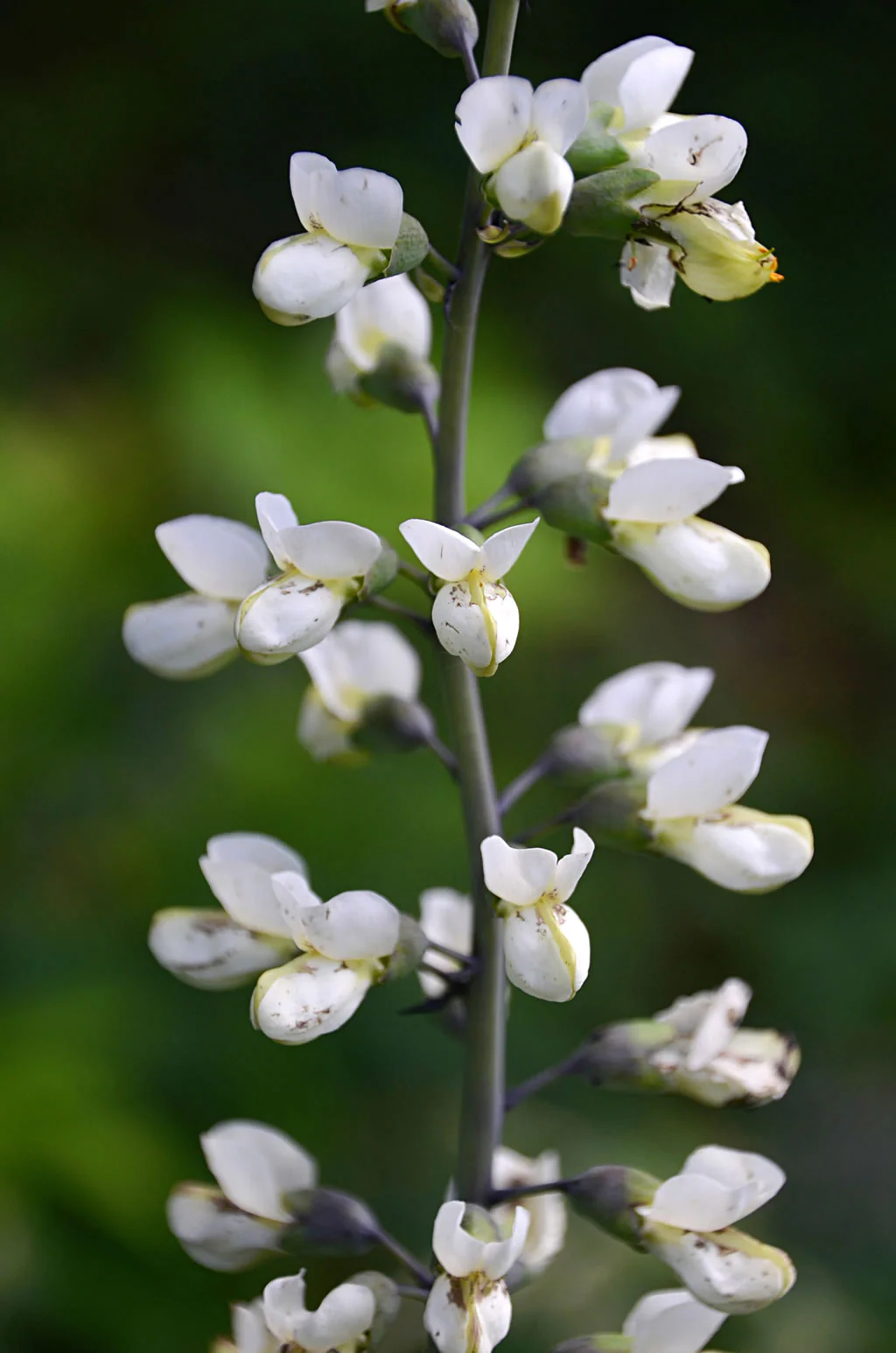
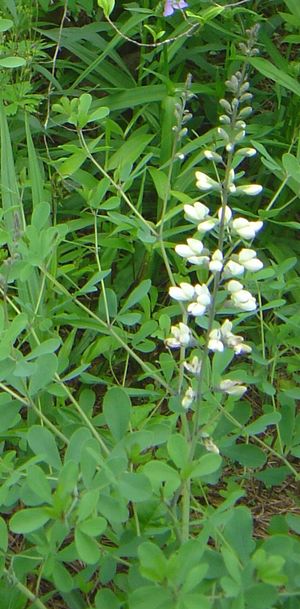
This perennial is often found in moist, well-drained soils, where it produces its distinctive large, creamy flower spikes, followed by showy seed pods that remain attractive into autumn.
With only a few known populations remaining and the species classified as critically imperiled in Georgia, Baptisia megacarpa faces threats from logging, invasive species, and habitat changes due to river damming. Conservation efforts emphasize protecting its native floodplain environment, making it not only a rare addition to the garden but also a symbol of ongoing regional biodiversity conservation.
Baptisia megacarpa—known as Apalachicola Wild Indigo or Bigpod Wild Indigo—is a rare and remarkable species native to the floodplains and forested slopes of the Florida Panhandle, southeastern Alabama, and southwestern Georgia. Its natural habitat includes sandy ridges and stream terraces in the Chattahoochee River drainage, making it specially adapted to the unique conditions of this region.
This perennial is often found in moist, well-drained soils, where it produces its distinctive large, creamy flower spikes, followed by showy seed pods that remain attractive into autumn.
With only a few known populations remaining and the species classified as critically imperiled in Georgia, Baptisia megacarpa faces threats from logging, invasive species, and habitat changes due to river damming. Conservation efforts emphasize protecting its native floodplain environment, making it not only a rare addition to the garden but also a symbol of ongoing regional biodiversity conservation.
Description
Baptisia megacarpa—known as Apalachicola Wild Indigo or Bigpod Wild Indigo—is a rare and remarkable species native to the floodplains and forested slopes of the Florida Panhandle, southeastern Alabama, and southwestern Georgia. Its natural habitat includes sandy ridges and stream terraces in the Chattahoochee River drainage, making it specially adapted to the unique conditions of this region.
This perennial is often found in moist, well-drained soils, where it produces its distinctive large, creamy flower spikes, followed by showy seed pods that remain attractive into autumn.
With only a few known populations remaining and the species classified as critically imperiled in Georgia, Baptisia megacarpa faces threats from logging, invasive species, and habitat changes due to river damming. Conservation efforts emphasize protecting its native floodplain environment, making it not only a rare addition to the garden but also a symbol of ongoing regional biodiversity conservation.