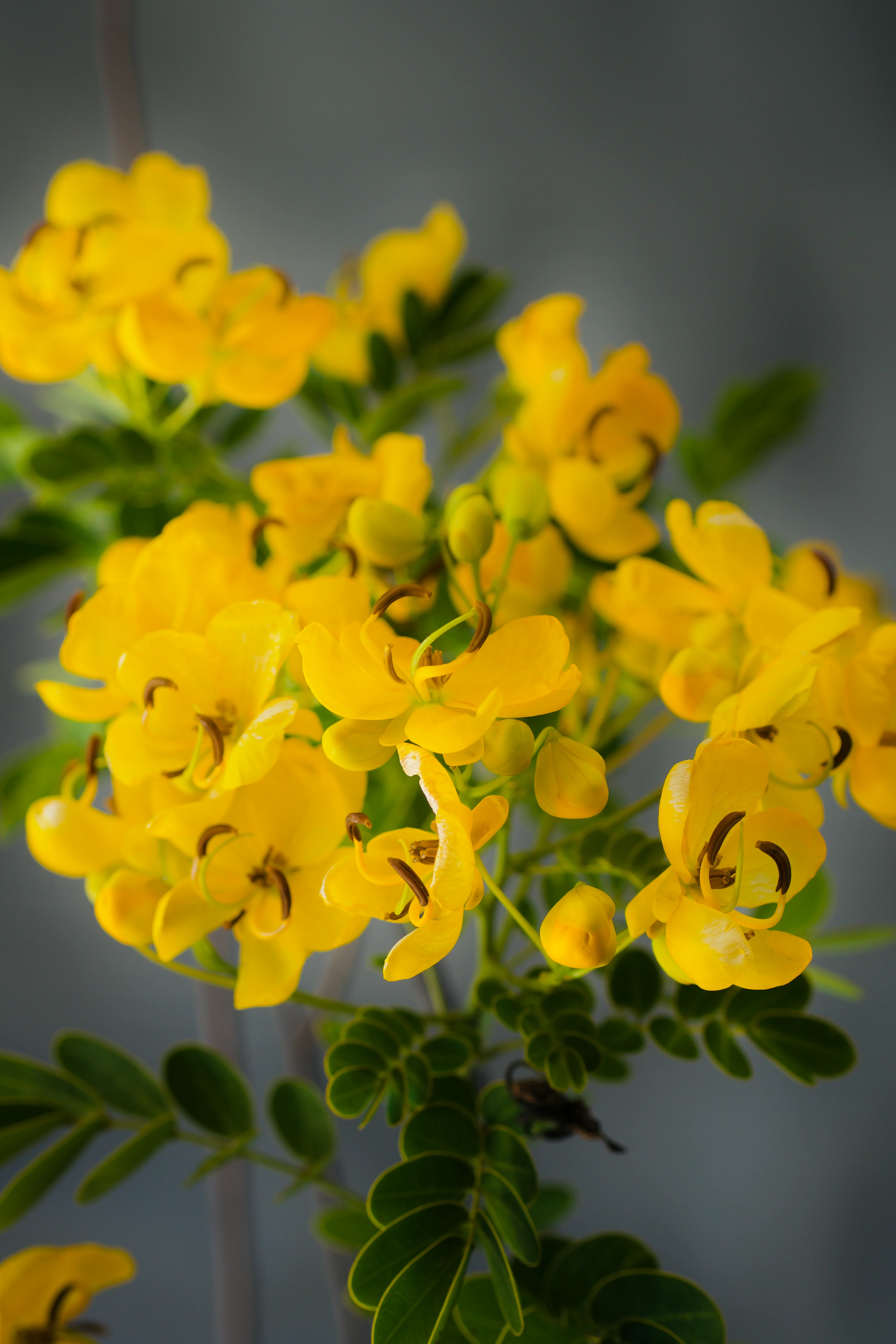
Cassia bicapsularis
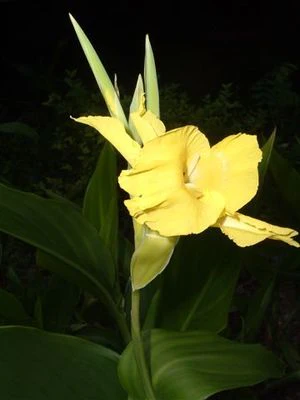
Native to Central and South America but naturalized across tropical regions worldwide, this fast-growing shrub produces its flowers not in spring or summer like a well-behaved plant, but in autumn and into early winter — great loose clusters of clear, saturated yellow at the ends of arching branches, each individual flower shaped with curved stamens that give it a vaguely butterfly-like silhouette. Cloudless Sulphur and Sleepy Orange butterflies, which find the plant irresistible as both a nectar source and larval host, tend to arrive in numbers when it blooms — a fact that either delights or mildly alarmed observers, depending on how attached you are to your foliage. The caterpillars, it should be said, are a vivid chartreuse and genuinely attractive. This is the bargain the plant offers.
The taxonomists, characteristically, cannot agree on the name. Cassia bicapsularis appears in older literature; current consensus leans toward Senna bicapsularis, though the debate continues in the way botanical debates do — at length, and largely among people who care deeply. We list it as Cassia here in the old tradition, without taking sides.
In zones 9 and warmer it behaves as a large, fast-growing evergreen shrub reaching 8 feet or more. In zone 8 it typically freezes to the ground in hard winters and returns vigorously from the roots the following spring — a perfectly acceptable arrangement, and one that keeps the plant at a more manageable scale. Site it in full sun and give it room. The late-season color it provides, at the exact moment when most gardens have exhausted their options, is not easily replaced by anything else.
Note: Woodlanders also carries 'Buttercream', a pale yellow-flowered selection shared with us by Joann Breland of Charleston — a quieter, more refined take on the same late-season display. Both are worth knowing.
Native to Central and South America but naturalized across tropical regions worldwide, this fast-growing shrub produces its flowers not in spring or summer like a well-behaved plant, but in autumn and into early winter — great loose clusters of clear, saturated yellow at the ends of arching branches, each individual flower shaped with curved stamens that give it a vaguely butterfly-like silhouette. Cloudless Sulphur and Sleepy Orange butterflies, which find the plant irresistible as both a nectar source and larval host, tend to arrive in numbers when it blooms — a fact that either delights or mildly alarmed observers, depending on how attached you are to your foliage. The caterpillars, it should be said, are a vivid chartreuse and genuinely attractive. This is the bargain the plant offers.
The taxonomists, characteristically, cannot agree on the name. Cassia bicapsularis appears in older literature; current consensus leans toward Senna bicapsularis, though the debate continues in the way botanical debates do — at length, and largely among people who care deeply. We list it as Cassia here in the old tradition, without taking sides.
In zones 9 and warmer it behaves as a large, fast-growing evergreen shrub reaching 8 feet or more. In zone 8 it typically freezes to the ground in hard winters and returns vigorously from the roots the following spring — a perfectly acceptable arrangement, and one that keeps the plant at a more manageable scale. Site it in full sun and give it room. The late-season color it provides, at the exact moment when most gardens have exhausted their options, is not easily replaced by anything else.
Note: Woodlanders also carries 'Buttercream', a pale yellow-flowered selection shared with us by Joann Breland of Charleston — a quieter, more refined take on the same late-season display. Both are worth knowing.
Description
Native to Central and South America but naturalized across tropical regions worldwide, this fast-growing shrub produces its flowers not in spring or summer like a well-behaved plant, but in autumn and into early winter — great loose clusters of clear, saturated yellow at the ends of arching branches, each individual flower shaped with curved stamens that give it a vaguely butterfly-like silhouette. Cloudless Sulphur and Sleepy Orange butterflies, which find the plant irresistible as both a nectar source and larval host, tend to arrive in numbers when it blooms — a fact that either delights or mildly alarmed observers, depending on how attached you are to your foliage. The caterpillars, it should be said, are a vivid chartreuse and genuinely attractive. This is the bargain the plant offers.
The taxonomists, characteristically, cannot agree on the name. Cassia bicapsularis appears in older literature; current consensus leans toward Senna bicapsularis, though the debate continues in the way botanical debates do — at length, and largely among people who care deeply. We list it as Cassia here in the old tradition, without taking sides.
In zones 9 and warmer it behaves as a large, fast-growing evergreen shrub reaching 8 feet or more. In zone 8 it typically freezes to the ground in hard winters and returns vigorously from the roots the following spring — a perfectly acceptable arrangement, and one that keeps the plant at a more manageable scale. Site it in full sun and give it room. The late-season color it provides, at the exact moment when most gardens have exhausted their options, is not easily replaced by anything else.
Note: Woodlanders also carries 'Buttercream', a pale yellow-flowered selection shared with us by Joann Breland of Charleston — a quieter, more refined take on the same late-season display. Both are worth knowing.