Ficus roxburghii
In the quiet green corners of Indian forests, where banyans throw their shadows long and monsoons usher life with thunderous applause, grows a plant of ancient bearing—Ficus roxburghii, also known in some circles as Ficus auriculata. This is no dainty exotic. It is a bold, gallant species—a shrub in the tropics, a heroic perennial in the American South—with a presence as memorable as a live oak draped in Spanish moss.
Here in the Deep South, where the soil runs sandy and red and winter knocks more gently at the door, this elephant-ear fig has found a second home. It was Joe LeVert of Augusta, Georgia, a true Southern plantsman, who first brought it to our attention. His thriving specimen, root-hardy through many a Southern winter, became the mother of our current stock—a plant born of grit, heritage, and care.
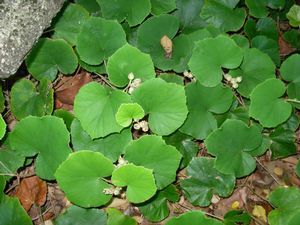
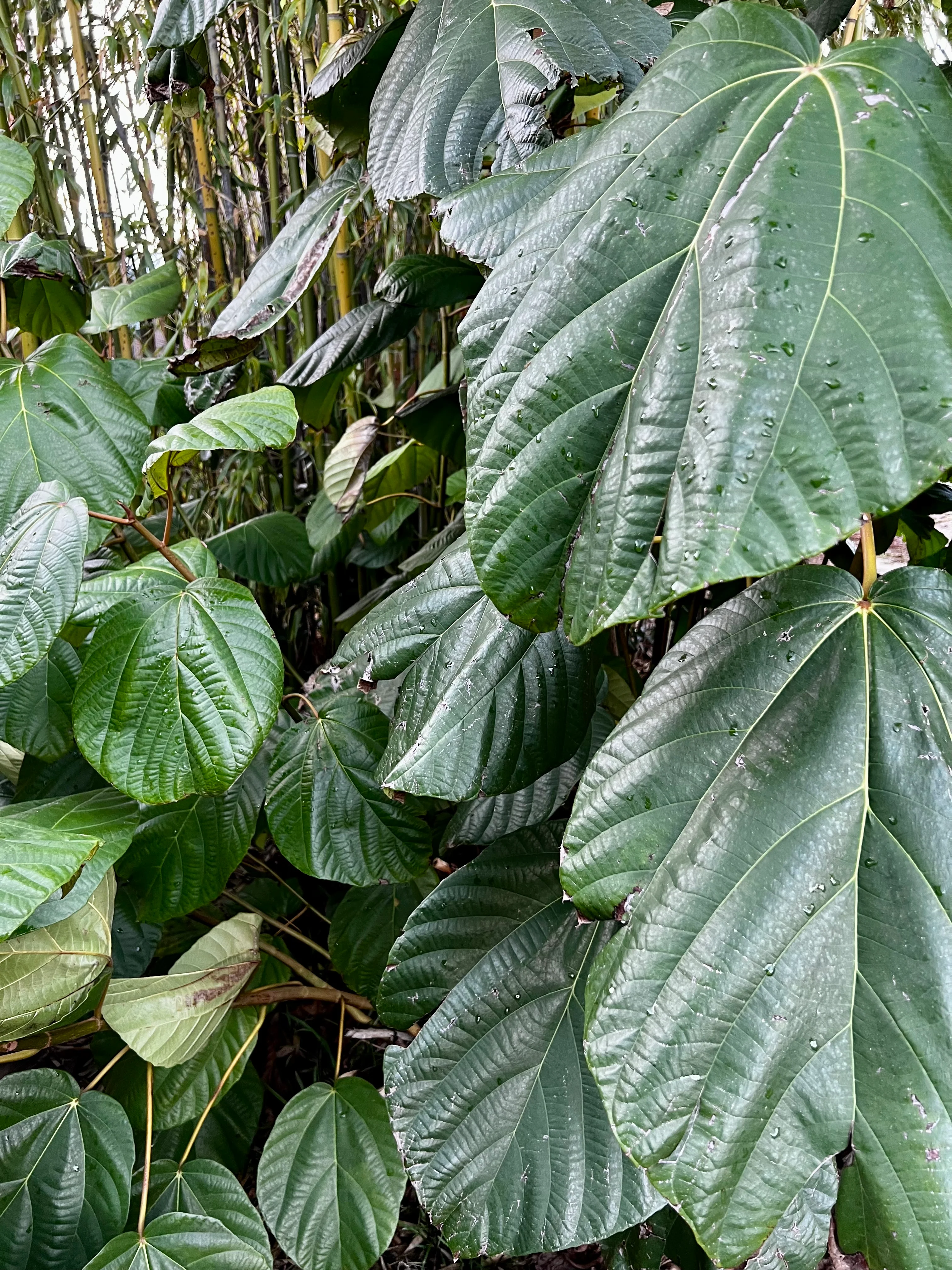
The leaves, sometimes stretching 15 inches across, gleam like lacquered shields—round, glossy, and substantial, they rise like heralds from the soil, transforming any garden bed into a living tapestry of the tropics. Set it near a shaded wall or in a wind-protected glen, and it will reward you with an almost prehistoric grandeur, evoking the bygone days when plants were emperors.
Ficus roxburghii is not merely ornamental. In its native range, it holds ethnobotanical importance—used in traditional medicine, folklore, and even cuisine. But here in our climate, its gift is visual: a rare foliage plant that evokes the jungle and brings lushness where blandness once stood.
Plant it where its roots can stretch and where water is not a stranger. Good soil, protection from heavy frost, and a drink now and then, and it will repay your kindness with vigor and presence.
In a world too often scrubbed sterile, Ficus roxburghii stands defiant and dignified—a living echo of ancient lands and old ways.
🌿 Highlights:
-
Hardiness: Root hardy to USDA Zone 8 with protection
-
Origin: Native to India; cultivated from long-proven Augusta, GA stock
-
Foliage: Enormous 12–15” round, glossy leaves with dramatic tropical texture
-
Habit: Bold perennial in the South; woody shrub in frost-free climates
-
Use: Perfect for protected Southern gardens seeking tropical character
-
Soil & Water: Thrives in fertile, moisture-retentive soil with adequate irrigation
-
Cultural Note: Holds medicinal and cultural importance in its native range
In the quiet green corners of Indian forests, where banyans throw their shadows long and monsoons usher life with thunderous applause, grows a plant of ancient bearing—Ficus roxburghii, also known in some circles as Ficus auriculata. This is no dainty exotic. It is a bold, gallant species—a shrub in the tropics, a heroic perennial in the American South—with a presence as memorable as a live oak draped in Spanish moss.
Here in the Deep South, where the soil runs sandy and red and winter knocks more gently at the door, this elephant-ear fig has found a second home. It was Joe LeVert of Augusta, Georgia, a true Southern plantsman, who first brought it to our attention. His thriving specimen, root-hardy through many a Southern winter, became the mother of our current stock—a plant born of grit, heritage, and care.
The leaves, sometimes stretching 15 inches across, gleam like lacquered shields—round, glossy, and substantial, they rise like heralds from the soil, transforming any garden bed into a living tapestry of the tropics. Set it near a shaded wall or in a wind-protected glen, and it will reward you with an almost prehistoric grandeur, evoking the bygone days when plants were emperors.
Ficus roxburghii is not merely ornamental. In its native range, it holds ethnobotanical importance—used in traditional medicine, folklore, and even cuisine. But here in our climate, its gift is visual: a rare foliage plant that evokes the jungle and brings lushness where blandness once stood.
Plant it where its roots can stretch and where water is not a stranger. Good soil, protection from heavy frost, and a drink now and then, and it will repay your kindness with vigor and presence.
In a world too often scrubbed sterile, Ficus roxburghii stands defiant and dignified—a living echo of ancient lands and old ways.
🌿 Highlights:
-
Hardiness: Root hardy to USDA Zone 8 with protection
-
Origin: Native to India; cultivated from long-proven Augusta, GA stock
-
Foliage: Enormous 12–15” round, glossy leaves with dramatic tropical texture
-
Habit: Bold perennial in the South; woody shrub in frost-free climates
-
Use: Perfect for protected Southern gardens seeking tropical character
-
Soil & Water: Thrives in fertile, moisture-retentive soil with adequate irrigation
-
Cultural Note: Holds medicinal and cultural importance in its native range
Original: $192.00
-70%$192.00
$57.60Description
In the quiet green corners of Indian forests, where banyans throw their shadows long and monsoons usher life with thunderous applause, grows a plant of ancient bearing—Ficus roxburghii, also known in some circles as Ficus auriculata. This is no dainty exotic. It is a bold, gallant species—a shrub in the tropics, a heroic perennial in the American South—with a presence as memorable as a live oak draped in Spanish moss.
Here in the Deep South, where the soil runs sandy and red and winter knocks more gently at the door, this elephant-ear fig has found a second home. It was Joe LeVert of Augusta, Georgia, a true Southern plantsman, who first brought it to our attention. His thriving specimen, root-hardy through many a Southern winter, became the mother of our current stock—a plant born of grit, heritage, and care.
The leaves, sometimes stretching 15 inches across, gleam like lacquered shields—round, glossy, and substantial, they rise like heralds from the soil, transforming any garden bed into a living tapestry of the tropics. Set it near a shaded wall or in a wind-protected glen, and it will reward you with an almost prehistoric grandeur, evoking the bygone days when plants were emperors.
Ficus roxburghii is not merely ornamental. In its native range, it holds ethnobotanical importance—used in traditional medicine, folklore, and even cuisine. But here in our climate, its gift is visual: a rare foliage plant that evokes the jungle and brings lushness where blandness once stood.
Plant it where its roots can stretch and where water is not a stranger. Good soil, protection from heavy frost, and a drink now and then, and it will repay your kindness with vigor and presence.
In a world too often scrubbed sterile, Ficus roxburghii stands defiant and dignified—a living echo of ancient lands and old ways.
🌿 Highlights:
-
Hardiness: Root hardy to USDA Zone 8 with protection
-
Origin: Native to India; cultivated from long-proven Augusta, GA stock
-
Foliage: Enormous 12–15” round, glossy leaves with dramatic tropical texture
-
Habit: Bold perennial in the South; woody shrub in frost-free climates
-
Use: Perfect for protected Southern gardens seeking tropical character
-
Soil & Water: Thrives in fertile, moisture-retentive soil with adequate irrigation
-
Cultural Note: Holds medicinal and cultural importance in its native range