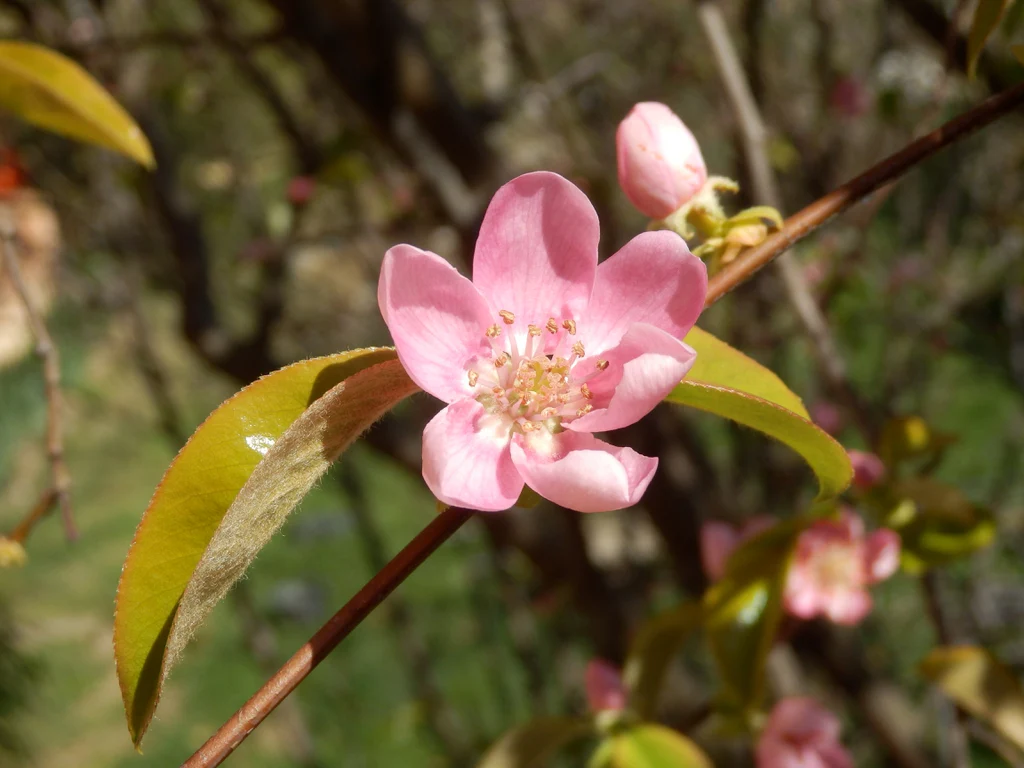
Pseudocydonia sinensis
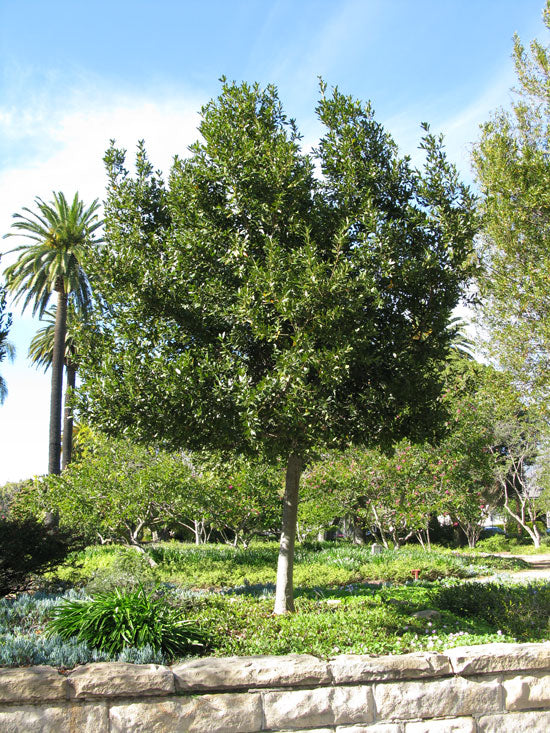
Chinese Quince is one of those trees that seems to offer something beautiful at every turn. Soft pink flowers arrive in spring, dark green leaves carry it through summer, and fall brings warm color along with large, fragrant fruit. Even in winter, its peeling bark gives the tree a quiet kind of beauty.
Why plant Pseudocydonia sinensis?
Chinese Quince has a way of settling into the garden with real presence. It is lovely in flower, of course, but what makes it so special is the way it continues to offer interest long after spring has passed.
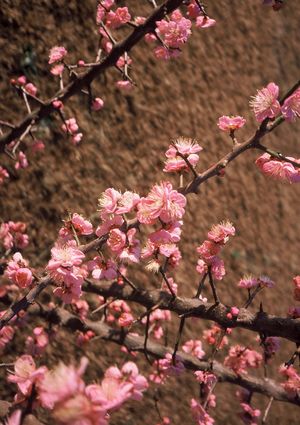
The flowers appear in soft pink along the older wood, subtle and elegant rather than flashy. As the season moves on, the tree fills out with rich green leaves that feel substantial and handsome through the heat of summer. Then, in autumn, the foliage turns shades of yellow, amber, and red, and the branches begin to carry large golden fruit that brings its own charm to the season.
One of the most beautiful features of Pseudocydonia sinensis is its bark. As the tree matures, the trunk and branches peel in patches of gray, green, tan, and brown, creating a wonderfully textured surface that stands out even more once the leaves have dropped. In winter, when the garden is quieter, that bark gives the tree a lasting elegance.
There is also something a little old-fashioned about Chinese Quince in the best possible way. The fruit is aromatic and ornamental, and while it is too hard to eat fresh, it has long been appreciated for preserves and other traditional uses. That sense of history only adds to its appeal.
This is a tree for people who enjoy gardens that change with the seasons and reward a closer look. It makes a beautiful specimen in an open space, near a walkway, or anywhere its bark, fruit, and branching shape can be appreciated up close. Over time, it becomes the kind of plant people ask about.
Chinese Quince is one of those trees that seems to offer something beautiful at every turn. Soft pink flowers arrive in spring, dark green leaves carry it through summer, and fall brings warm color along with large, fragrant fruit. Even in winter, its peeling bark gives the tree a quiet kind of beauty.
Why plant Pseudocydonia sinensis?
Chinese Quince has a way of settling into the garden with real presence. It is lovely in flower, of course, but what makes it so special is the way it continues to offer interest long after spring has passed.
The flowers appear in soft pink along the older wood, subtle and elegant rather than flashy. As the season moves on, the tree fills out with rich green leaves that feel substantial and handsome through the heat of summer. Then, in autumn, the foliage turns shades of yellow, amber, and red, and the branches begin to carry large golden fruit that brings its own charm to the season.
One of the most beautiful features of Pseudocydonia sinensis is its bark. As the tree matures, the trunk and branches peel in patches of gray, green, tan, and brown, creating a wonderfully textured surface that stands out even more once the leaves have dropped. In winter, when the garden is quieter, that bark gives the tree a lasting elegance.
There is also something a little old-fashioned about Chinese Quince in the best possible way. The fruit is aromatic and ornamental, and while it is too hard to eat fresh, it has long been appreciated for preserves and other traditional uses. That sense of history only adds to its appeal.
This is a tree for people who enjoy gardens that change with the seasons and reward a closer look. It makes a beautiful specimen in an open space, near a walkway, or anywhere its bark, fruit, and branching shape can be appreciated up close. Over time, it becomes the kind of plant people ask about.
Original: $23.00
-70%$23.00
$6.90Description
Chinese Quince is one of those trees that seems to offer something beautiful at every turn. Soft pink flowers arrive in spring, dark green leaves carry it through summer, and fall brings warm color along with large, fragrant fruit. Even in winter, its peeling bark gives the tree a quiet kind of beauty.
Why plant Pseudocydonia sinensis?
Chinese Quince has a way of settling into the garden with real presence. It is lovely in flower, of course, but what makes it so special is the way it continues to offer interest long after spring has passed.
The flowers appear in soft pink along the older wood, subtle and elegant rather than flashy. As the season moves on, the tree fills out with rich green leaves that feel substantial and handsome through the heat of summer. Then, in autumn, the foliage turns shades of yellow, amber, and red, and the branches begin to carry large golden fruit that brings its own charm to the season.
One of the most beautiful features of Pseudocydonia sinensis is its bark. As the tree matures, the trunk and branches peel in patches of gray, green, tan, and brown, creating a wonderfully textured surface that stands out even more once the leaves have dropped. In winter, when the garden is quieter, that bark gives the tree a lasting elegance.
There is also something a little old-fashioned about Chinese Quince in the best possible way. The fruit is aromatic and ornamental, and while it is too hard to eat fresh, it has long been appreciated for preserves and other traditional uses. That sense of history only adds to its appeal.
This is a tree for people who enjoy gardens that change with the seasons and reward a closer look. It makes a beautiful specimen in an open space, near a walkway, or anywhere its bark, fruit, and branching shape can be appreciated up close. Over time, it becomes the kind of plant people ask about.