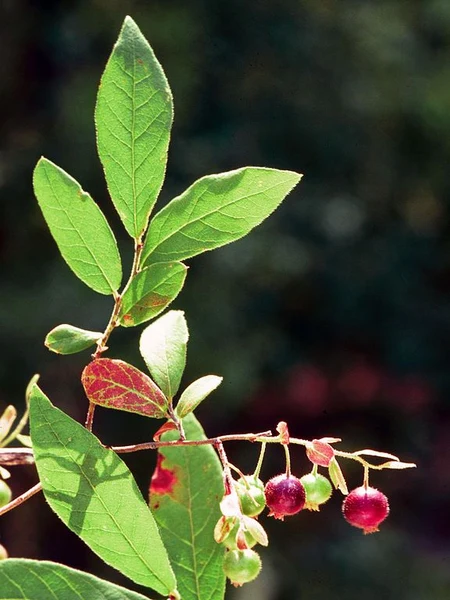
Vaccinium stamineum
A native blueberry cousin with soft gray-green leaves, subtle fruit, and the spirit of the Southern sandhills.
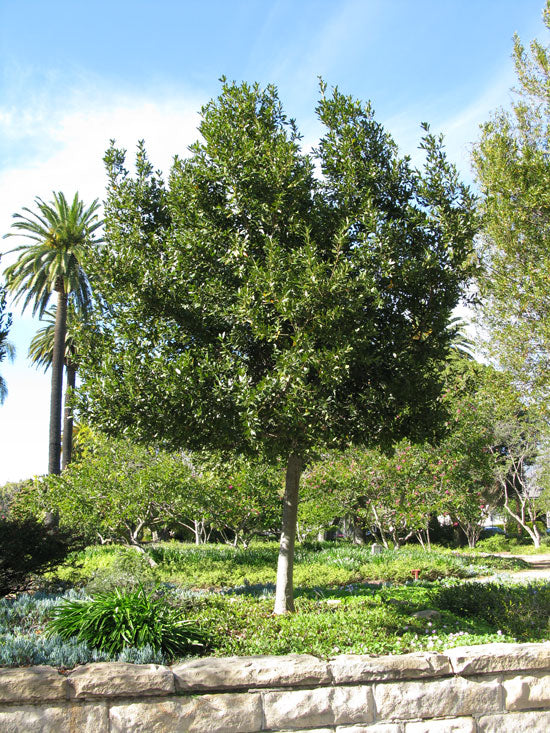
Vaccinium stamineum, known as Deerberry, is a wild and variable native shrub, long at home in the sandy uplands, pinewoods, and old-field edges of the Southeastern United States. Less familiar than its highbush or rabbiteye cousins, Deerberry is a plant of quiet beauty and adaptability, thriving where the soil runs dry, lean, and acidic—and where few others dare linger.
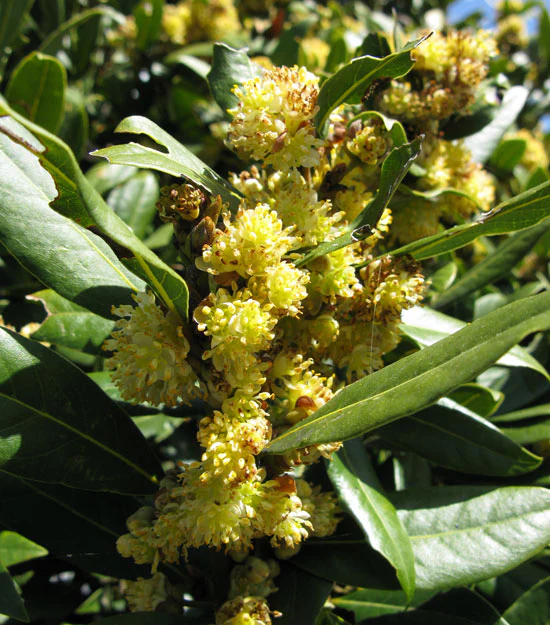
This deciduous shrub offers subtle seasonal interest. Its narrow, elliptical leaves range in tone from fresh spring green to a striking glaucous blue-green, the latter making certain forms stand out like old silver in the landscape. In early summer, delicate bell-shaped flowers dangle from slender pedicels, later giving way to relatively large berries—ripening from green to pink, then dusky purple or brown. While the fruit is edible, if somewhat astringent, it remains valuable to wildlife, including birds, deer, and small mammals.
The plants offered here are cutting-grown selections from a particularly attractive colony found growing in the sandhills of South Carolina—notable for its glaucous foliage, elegant structure, and ability to form naturalistic colonies over time. It performs best in well-drained, sandy, acidic soils in full sun to partial shade, and is ideal for naturalizing, understory restoration, and native gardens where subtlety is welcome.
Native Range: Southeastern United States
Foliage: Deciduous; varies from green to glaucous blue-green
Bloom Time: Late spring to early summer
Flower Color: White, bell-shaped
Fruit: Green to pinkish-purple; large, edible but mildly flavored
Notable Traits: Wildlife-friendly, glaucous foliage, drought-tolerant, native colonizer
Garden Uses: Naturalistic plantings, sandhill and pine ecosystem gardens, pollinator and wildlife gardens
Photos courtesy of Eric Hunt and Susan Strine
A native blueberry cousin with soft gray-green leaves, subtle fruit, and the spirit of the Southern sandhills.
Vaccinium stamineum, known as Deerberry, is a wild and variable native shrub, long at home in the sandy uplands, pinewoods, and old-field edges of the Southeastern United States. Less familiar than its highbush or rabbiteye cousins, Deerberry is a plant of quiet beauty and adaptability, thriving where the soil runs dry, lean, and acidic—and where few others dare linger.
This deciduous shrub offers subtle seasonal interest. Its narrow, elliptical leaves range in tone from fresh spring green to a striking glaucous blue-green, the latter making certain forms stand out like old silver in the landscape. In early summer, delicate bell-shaped flowers dangle from slender pedicels, later giving way to relatively large berries—ripening from green to pink, then dusky purple or brown. While the fruit is edible, if somewhat astringent, it remains valuable to wildlife, including birds, deer, and small mammals.
The plants offered here are cutting-grown selections from a particularly attractive colony found growing in the sandhills of South Carolina—notable for its glaucous foliage, elegant structure, and ability to form naturalistic colonies over time. It performs best in well-drained, sandy, acidic soils in full sun to partial shade, and is ideal for naturalizing, understory restoration, and native gardens where subtlety is welcome.
Native Range: Southeastern United States
Foliage: Deciduous; varies from green to glaucous blue-green
Bloom Time: Late spring to early summer
Flower Color: White, bell-shaped
Fruit: Green to pinkish-purple; large, edible but mildly flavored
Notable Traits: Wildlife-friendly, glaucous foliage, drought-tolerant, native colonizer
Garden Uses: Naturalistic plantings, sandhill and pine ecosystem gardens, pollinator and wildlife gardens
Photos courtesy of Eric Hunt and Susan Strine
Description
A native blueberry cousin with soft gray-green leaves, subtle fruit, and the spirit of the Southern sandhills.
Vaccinium stamineum, known as Deerberry, is a wild and variable native shrub, long at home in the sandy uplands, pinewoods, and old-field edges of the Southeastern United States. Less familiar than its highbush or rabbiteye cousins, Deerberry is a plant of quiet beauty and adaptability, thriving where the soil runs dry, lean, and acidic—and where few others dare linger.
This deciduous shrub offers subtle seasonal interest. Its narrow, elliptical leaves range in tone from fresh spring green to a striking glaucous blue-green, the latter making certain forms stand out like old silver in the landscape. In early summer, delicate bell-shaped flowers dangle from slender pedicels, later giving way to relatively large berries—ripening from green to pink, then dusky purple or brown. While the fruit is edible, if somewhat astringent, it remains valuable to wildlife, including birds, deer, and small mammals.
The plants offered here are cutting-grown selections from a particularly attractive colony found growing in the sandhills of South Carolina—notable for its glaucous foliage, elegant structure, and ability to form naturalistic colonies over time. It performs best in well-drained, sandy, acidic soils in full sun to partial shade, and is ideal for naturalizing, understory restoration, and native gardens where subtlety is welcome.
Native Range: Southeastern United States
Foliage: Deciduous; varies from green to glaucous blue-green
Bloom Time: Late spring to early summer
Flower Color: White, bell-shaped
Fruit: Green to pinkish-purple; large, edible but mildly flavored
Notable Traits: Wildlife-friendly, glaucous foliage, drought-tolerant, native colonizer
Garden Uses: Naturalistic plantings, sandhill and pine ecosystem gardens, pollinator and wildlife gardens
Photos courtesy of Eric Hunt and Susan Strine